Boring is a critical process in machining. It contributes significantly to the overall precision and quality of manufactured parts. But what is the role of boring in machining? This technique creates large, precise holes in various materials. It differs from drilling, which typically generates smaller holes.
Boring enhances the accuracy of part dimensions. It often follows drilling, ensuring holes meet specific tolerances. By removing a small amount of material, it provides a finer finish. This gap in understanding can lead to misconceptions about its importance.
Moreover, the efficiency of boring impacts production rates. Yet, it requires careful setup and skilled operators. Without proper knowledge, mistakes can occur. This reinforces the need for ongoing education in machining practices. Emphasizing the significance of boring is essential for quality outcomes.
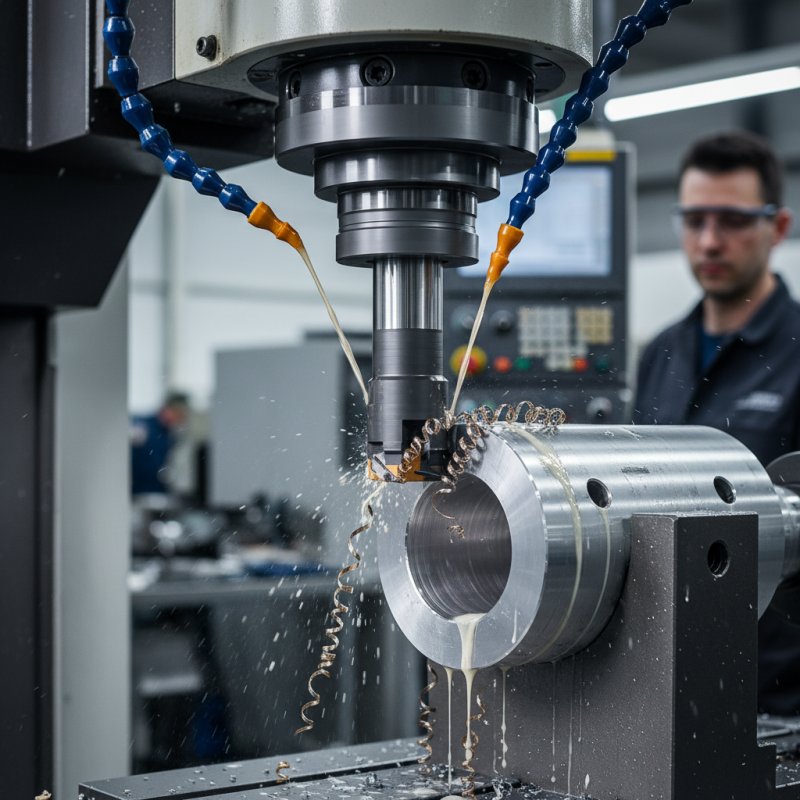
Boring is a machining process that creates precise and smooth holes. It involves removing material from the interior of a workpiece. This method is crucial for achieving precise dimensions and surface finishes. Understanding its significance helps in selecting the right techniques for various applications.
The importance of boring cannot be overstated. It enhances the quality of components used in different industries. Boring allows for the repair of previously machined parts, which can be more economical than making new ones. However, it's essential to ensure proper setup. Misalignment can lead to errors, making the hole unusable. Operators must be skilled to prevent these mistakes.
In practice, boring is often performed with various tools. Each tool has a specific purpose and application. For instance, a fine boring head provides exceptional precision for critical parts. Conversely, rough boring tools are better for quick, rough operations. It’s essential to choose the right tool based on the task at hand to optimize performance. Misjudgments here can lead to wasted materials and time. Careful consideration and expertise are vital in this process.
Boring processes play a crucial role in machining, especially for creating precise holes with desired diameters. The industry recognizes several types of boring. Each type serves specific applications. For instance, horizontal boring mills excel in large component manufacturing. These machines can accommodate heavy loads, making them ideal for drilling wide openings.
Another prominent type is line boring. This method is often used for repairing equipment, especially large machinery. A study by the National Tooling and Machining Association noted that around 20% of machining time focuses on boring operations. Despite its importance, some manufacturers overlook its intricacies. They may underestimate the need for high-quality tools and setup precision. Inadequate attention can lead to tolerances exceeding acceptable limits.
Reaming is a refined boring process, enhancing the finish and accuracy of pre-drilled holes. It’s vital for industries requiring high precision, such as aerospace and automotive. An impressive 70% of aerospace components demand precise hole features. However, achieving the desired results requires skilled operators. Understanding tool wear and machine performance is essential. This knowledge is often lacking, leading to mistakes and inefficiencies.
| Boring Process | Description | Applications | Advantages |
|---|---|---|---|
| Conventional Boring | A standard method using a single-point cutting tool. | Engine blocks, flanges, and precision holes. | Cost-effective for simple holes and repairs. |
| Trebore Boring | An advanced boring system that uses multiple cutting heads. | Large castings and complex geometries. | Increased productivity and precision on large parts. |
| Boring on CNC Machines | Utilizing computer numerical control to enhance precision. | Highly complex components and assemblies. | High repeatability and flexibility in production. |
| Spindle Boring | Uses a rotating spindle to bore holes in a workpiece. | Automotive components, aerospace parts. | High-speed operation and fine tolerances. |
| Micro Boring | Focused on creating micro-sized holes with precision. | Medical devices, electronic components. | Exceptional precision in miniature applications. |
Boring is a crucial part of machining processes. It involves enlarging existing holes to achieve precise dimensions. Several key tools and technologies play a role in this operation. These tools include boring bars, drill bits, and reamers. Each tool has unique characteristics tailored for specific projects.
Boring bars are often used in CNC machines. They provide stability and accuracy while cutting through tough materials. The length and stiffness of the bars can significantly affect the quality of the bore. Drill bits can pre-emptively create holes, while reamers are used for finishing. Each of these tools requires careful selection based on the material and desired hole specifications.
The technology behind boring has advanced rapidly. Modern CNC machines offer automated capabilities, enhancing productivity. Yet, choosing the correct parameters remains a challenge. Operators must ensure proper speed and feed rates. Miscalculations can lead to defects. Continuous training and knowledge sharing are essential for maintaining efficiency. Striking a balance between technology and human skills is vital in this field.
Boring is a critical process in machining that greatly influences performance and quality. Several factors play a significant role in achieving optimal results. These factors include the type of boring tool used, cutting speeds, and feed rates. Each of these elements needs to be carefully balanced.
Tool selection is crucial. A well-chosen tool can enhance precision. However, the tool should be checked regularly for wear. A worn tool can lead to inaccuracies. Improper tool choice can result in poor surface finish.
Cutting speeds also matter. Too fast can cause overheating. Too slow can lead to ineffective machining. Finding the right balance requires testing and adjustments.
Tips: Monitor tool wear closely. Regular maintenance can extend tool life. Experiment with different cutting speeds for better outcomes. This involves careful observation and adjustments based on performance. Every machining environment is unique, so what works in one scenario may not in another. Reflection on results is essential for continuous improvement.
Boring in machining plays a crucial role in achieving precision. However, this process is not without its challenges. One major issue is tool wear. As the boring process continues, the cutting tools degrade, affecting the quality of the bore. Operators must regularly monitor tool condition and performance. This can be time-consuming and requires skilled personnel.
Innovations in boring techniques are emerging to address these inefficiencies. Advanced materials for cutting tools promise longer life and better performance. Additionally, automated monitoring systems are becoming more prevalent. These systems track tool wear in real-time. They can signal when a tool needs replacement, reducing unnecessary downtime.
Still, not all innovations are foolproof. The reliability of new technologies can vary. Some may be slow to adopt changes due to the learning curve involved. There’s always a risk of over-reliance on technology. This highlights the importance of operator training. Skilled workers remain vital in balancing efficiency and precision.
: Boring is a process that creates smooth, precise holes in a workpiece by removing material from the inside.
Boring improves component quality and allows for the repair of previously machined parts, which can save money.
There are various boring tools, like fine boring heads for precision and rough boring tools for quick, rough operations.
Tool wear degrades cutting tools, impacting the quality of the bore over time, requiring careful monitoring and maintenance.
Innovations include advanced cutting materials and automated monitoring systems that track tool wear in real-time.
Skilled operators help balance efficiency and precision, especially with new technologies that may not be reliable or easy to adopt.
Misalignment can lead to errors making the hole unusable, highlighting the need for proper setup and skilled operators.
Choosing the wrong tool can waste materials and time, emphasizing the need for careful consideration of the task.
New technologies can have reliability issues and require a learning curve, making training essential for effective use.
Boring is a crucial machining process that enhances the precision and functionality of cylindrical holes in various materials. Understanding "what is the role of boring in machining" is essential for optimizing manufacturing outcomes, as it not only increases the diameter of pre-existing holes but also improves their dimensional accuracy and surface finish. Different types of boring processes, such as gun boring and vertical boring, are employed based on specific applications, allowing for versatility in production.
Key tools and technologies, such as boring bars and cutting inserts, play a significant role in enhancing boring operations, while factors like tool geometry, material properties, and machining parameters influence the overall performance and quality of the process. Despite its advantages, the industry faces challenges including tool wear and vibration, prompting ongoing innovations aimed at improving efficiency and precision in boring techniques.

DSCUT CNC