Top 10 Ways to Improve Accuracy in CNC Machining?

Time:2026-05-01 Author:Henry
0%

In the competitive landscape of CNC machining, understanding how to improve accuracy in CNC machining is crucial for success. According to a report by the National Institute of Standards and Technology (NIST), inaccuracies in machining can cost manufacturers up to 30% of their operational efficiency. This statistic highlights the urgency for companies to adopt effective strategies that enhance precision and reduce defects.

Addressing the complexities of CNC machining, various factors can lead to discrepancies. These include tool wear, machine calibration, and environmental conditions. The American Society of Mechanical Engineers (ASME) emphasizes the need for regular maintenance and monitoring of equipment to minimize such issues. Implementing structured workflows and embracing advanced technologies is not just beneficial; it is necessary for maintaining market competitiveness.

Companies must remain vigilant about the evolving challenges in the industry. Continuous learning and adaptation are vital for improving machining accuracy. By investing in training and leveraging data analytics, organizations can pinpoint areas for enhancement. The journey to precision in CNC machining involves both technology and the human element, making it imperative to cultivate a culture of innovation and responsibility.
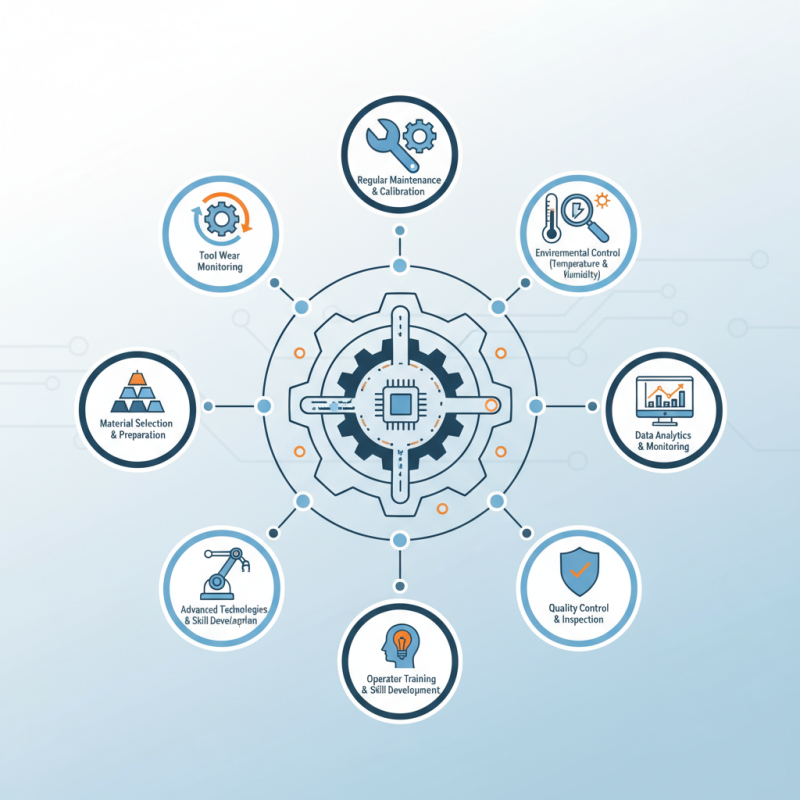
Top 10 Ways to Improve Accuracy in CNC Machining?

Understanding CNC Machining Accuracy: Key Concepts and Importance

CNC machining accuracy is crucial in manufacturing. It determines how precise the final product will be. When working with CNC machines, understanding key concepts enhances reliability. Factors like tool wear, thermal expansion, and fixturing play vital roles in accuracy.

In practice, achieving perfect accuracy is challenging. An operator must frequently calibrate machines to minimize errors. Variations in material properties can also affect results. A detailed inspection process is essential, yet many overlook this step. Inconsistent tool maintenance further complicates things. Addressing these issues requires ongoing training and expert guidance.

Focusing on accuracy improves overall production quality. Investing in proper tools and continuous learning pays off. While ideal accuracy may be hard to achieve, striving for improvement leads to better outcomes. Embracing small adjustments can make a significant difference over time.

Regular Maintenance: Ensuring Optimal Machine Performance and Precision

Regular maintenance is crucial for optimal CNC machine performance. Machines need routine checks to maintain precision. Regular lubrication extends the life of components and ensures everything operates smoothly. Dust and debris can accumulate, affecting accuracy. Cleaning the work area is essential. It helps prevent errors in machining processes.

Use calibrated tools to assess machine performance. This allows for precise adjustments to be made when necessary. Operators should be trained to identify signs of wear and tear. Noticing small discrepancies early can prevent larger issues from arising later. Timely replacements of worn-out parts enhance machine reliability and enhance productivity.

It’s important to keep records of maintenance activities. Documenting what has been done can highlight patterns or recurring issues. This reveals areas for improvement. Reflection is key. Analyzing past maintenance can lead to better practices and increased accuracy in future machining operations. Embracing a proactive approach can often prevent costly downtime.

Calibration Techniques: Enhancing Measurement Accuracy in CNC Machines

Calibration techniques play a crucial role in enhancing measurement accuracy in CNC machining. Precision is vital for competitive manufacturing. A recent industry report indicates that calibration errors can account for up to 30% of defects in production. This highlights the need for effective calibration practices. Without regular calibration checks, small deviations can compound, leading to significant accuracy issues over time.

One effective technique is the use of laser calibration. This method provides highly accurate measurements and can detect issues that traditional methods may overlook. Many operators find that using laser systems improves their overall accuracy by as much as 40%. However, it’s essential to ensure that these systems are regularly maintained. Neglecting maintenance can lead to erroneous readings and misguided production efforts.

Another important aspect of calibration is the integration of feedback systems. These systems monitor machining accuracy in real-time. They can provide immediate adjustments based on performance data. Yet, reliance on these systems can make operators complacent. Continuous training is necessary to ensure staff remains vigilant. Data shows that companies with a strong training regime see a 15% increase in overall machining accuracy. Regular reviews and updates in calibration processes are vital to maintain high standards in CNC machining.

Material Selection: Impact on Machining Accuracy and Quality

Material selection plays a crucial role in CNC machining accuracy and quality. Choosing the right material can significantly influence the machining process. Different materials react uniquely to cutting tools. For example, soft metals are easier to machine but may lack of durability. Conversely, hard materials provide strength but can cause tool wear and increased operational costs.

Selecting the wrong material can lead to inconsistencies. A material that chips easily may create inaccuracies in dimensions. Machinists must consider factors like thermal conductivity and hardness. For instance, materials with high thermal expansion rates can distort during the machining process. This distortion can lead to poor tolerance and surface finish.

It's important to understand the characteristics of each material. Not all machining operations require the same precision. In some cases, standard tolerances are acceptable. However, for high-precision components, meticulous material choice becomes essential. Continual learning and adaptation in material selection can help improve machining accuracy over time. Mistakes in material choice can be costly. Reflecting on past selections is a way to enhance future manufacturing processes.

Top 10 Ways to Improve Accuracy in CNC Machining

Advanced Software Solutions: Using Technology to Improve CNC Precision

In the world of CNC machining, accuracy is key. Advanced software solutions play a critical role in enhancing precision. These tools streamline processes and reduce human error. By incorporating real-time monitoring, operators can track performance continuously. This way, they can detect deviations early and adjust settings accordingly.

Tips for improving accuracy:

  • Adopt simulation software: This allows users to visualize machining processes before actual production. It is essential for identifying potential issues.
  • Another recommendation is using advanced toolpath strategies. These strategies optimize the tool's movement, resulting in cleaner cuts.

Automation is also beneficial. Automated systems can maintain consistent performance and reduce fatigue in operators. However, remember that not all software is perfect. Continuous evaluation of systems is necessary to ensure they meet current needs. Embracing feedback from the production floor can highlight areas for improvement.

FAQS

: Why is CNC machining accuracy important?

: CNC machining accuracy affects the precision of the final product, impacting overall quality.

What factors influence CNC machining accuracy?

Tool wear, thermal expansion, and fixturing are vital for maintaining accuracy in machining processes.

How often should CNC machines be calibrated?

Machines should be calibrated frequently to minimize errors and enhance production quality.

Why is regular maintenance necessary for CNC machines?

Regular maintenance keeps machines performing optimally, prevents errors, and extends the life of components.

How can operators identify wear and tear on machines?

Operators should be trained to notice small discrepancies that indicate wear, preventing larger issues.

What role does advanced software play in precision?

Advanced software enhances precision by streamlining processes and reducing human error in machining.

How can simulation software improve CNC processes?

Simulation software allows visualization of processes, helping to identify potential issues before production starts.

Is automation beneficial for CNC accuracy?

Yes, automation maintains consistent performance and reduces operator fatigue, improving accuracy.

Should software systems be regularly evaluated?

Yes, continuous evaluation ensures software meets current needs and incorporates feedback for improvement.

What is a common oversight in machining processes?

Many overlook the importance of detailed inspection, which is crucial for maintaining accuracy.

Conclusion

To improve accuracy in CNC machining, it's essential to understand key concepts and the significance of precision. Regular maintenance plays a crucial role in ensuring that machines operate at their best, thereby enhancing both performance and precision. Calibration techniques are also vital, as they directly affect measurement accuracy in CNC operations. Additionally, the selection of materials significantly influences the overall machining accuracy and quality of the final product.

Incorporating advanced software solutions can further facilitate the process of how to improve accuracy in CNC machining. By leveraging cutting-edge technology, manufacturers can optimize precision, reduce errors, and enhance operational efficiency. Overall, a comprehensive approach that includes maintenance, calibration, material choice, and software utilization is fundamental for achieving high accuracy in CNC machining.

Henry

Henry

Henry is a dedicated marketing professional with a profound expertise in the company's offerings. With years of experience in the industry, he possesses an impressive understanding of the market dynamics and consumer behaviors that drive success. Henry is committed to sharing his insights through......