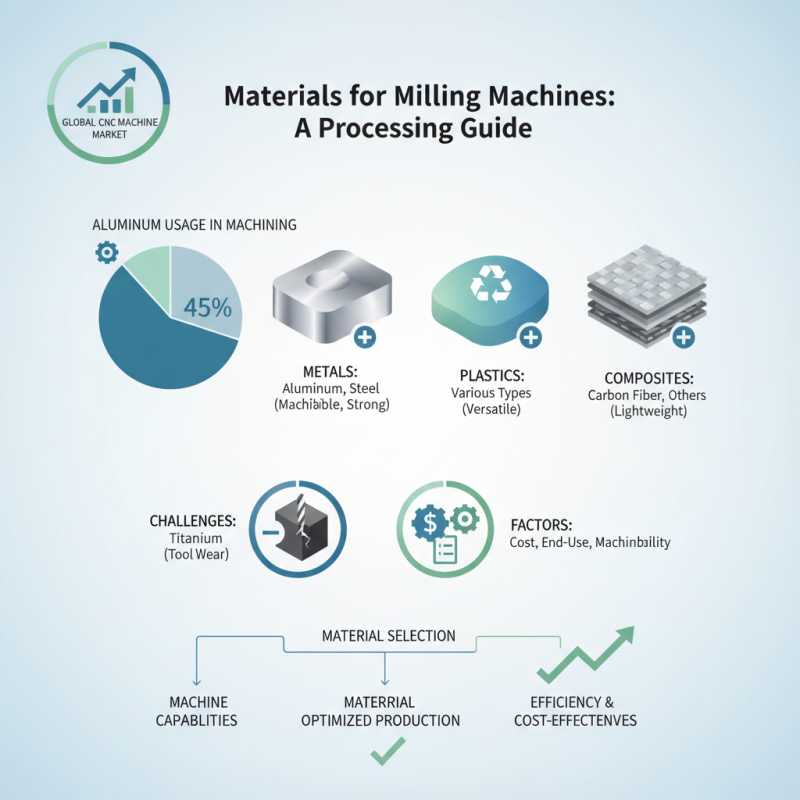
Choosing the right materials for milling machines is crucial in manufacturing processes. The global CNC machine market was valued at approximately $63 billion in 2022 and is projected to grow. This growth reflects the increasing demand for efficient machining solutions. Understanding what materials can be processed by milling machines is vital for optimizing production.
Milling machines can work with a variety of materials, including metals, plastics, and composites. For instance, aluminum and steel are common choices due to their strength and machinability. According to reports, about 45% of machining operations utilize aluminum. However, some materials pose challenges. Harder materials like titanium may lead to tool wear.
Selecting materials involves consideration of not only the end-use but also cost implications and machinability. Companies must sometimes reconsider their choices based on machine capabilities. Understanding which materials can be processed effectively can lead to better production outcomes. This knowledge empowers manufacturers to make informed decisions, ensuring efficiency and cost-effectiveness in the long run.
Selecting the right materials for milling machines is critical for achieving precision and efficiency. One should consider hardness, toughness, and machinability. Harder materials may provide more durability but can lead to increased tool wear. On the other hand, softer materials are easier to machine but might not withstand heavy use.
The type of milling operation also influences material choice. For instance, if you are working with intricate designs, lighter materials may be preferable. These allow for better finish and detail. However, heavier materials can be more stable during milling, which minimizes vibrations. Reflecting on this balance is essential for optimizing output.
Cost-effectiveness is another factor. Some high-performance materials come with a steep price. While they may offer excellent results, you must assess whether the benefits justify the cost. Failing to do so can lead to budget overruns. It's important to evaluate your specific needs and resources, ensuring that material selection aligns with operational goals.
Milling machines are versatile tools that process various materials. Commonly, metals are a primary focus. Aluminum is lightweight and easy to work with. It boasts excellent machinability, making it a favorite. According to industry reports, aluminum contributes to about 30% of total milling operations globally.
Steel is another prevalent material in milling. It is durable and strong, often used for making parts that require high precision. However, steel can be challenging to machine due to its toughness, which may lead to tool wear. Recent statistics indicate that over 50% of manufacturing professionals report increased tool costs associated with steel milling.
Plastics have gained traction in this field. They are lighter and often less expensive than metals. Common types like acrylic and nylon can be processed efficiently. However, plastics may require careful handling to prevent deformation during milling. It is essential to weigh the pros and cons of each material. Choosing the wrong one can lead to costly errors and compromised quality.
When selecting materials for milling machines, understanding hardness and toughness is crucial. Material hardness determines resistance to deformation. Toughness, on the other hand, affects how well a material can absorb energy before cracking. These traits influence the machining process significantly.
Hard materials like titanium and hardened steel may offer excellent wear resistance. However, they can also be challenging to mill. Using incorrect tools can lead to premature wear or cutting failures. Soft materials like aluminum are easier to machine but may lack the durability required for some applications.
Choosing the right balance between hardness and toughness is vital. Consider the final product and its application. It’s essential to test and adjust parameters during the milling process. Achieving optimal results often involves trial and error. Learning from mistakes can lead to better outcomes in future operations.
| Material Type | Hardness (HRC) | Toughness | Machinability Rating | Common Applications |
|---|---|---|---|---|
| Aluminum Alloy | 70-90 | High | Excellent | Aerospace, Automotive Parts |
| Mild Steel | 30-50 | Moderate | Good | Construction, Machinery |
| Stainless Steel | 60-100 | Moderate | Fair | Food Processing, Medical Equipment |
| Tool Steel | 50-67 | High | Fair | Cutting Tools, Dies |
| Titanium Alloy | 30-40 | Very High | Poor | Aerospace, Medical Implants |
When considering milling machine materials, cost-effectiveness is crucial. The choice impacts efficiency and long-term expenses. High-quality materials may seem expensive upfront, but they can save costs over time by reducing wear and maintenance. Cheaper materials might require frequent replacements, leading to higher overall expenditures.
Evaluate the specific needs of your projects. Different materials, such as aluminum, steel, or composites, have unique properties. Aluminum is lightweight and corrosion-resistant, making it suitable for many applications. Steel, while heavier, offers durability and strength. Composites can provide excellent performance at a lower weight, but they may be costlier.
Tips: Focus on the compatibility of the material with your projects. Test different materials on small projects first. This step allows you to weigh performance against cost before making larger investments. Reflect on the trade-offs involved. While cheaper options are tempting, consider their long-term reliability and performance. Avoid rushing into decisions based on price alone.
Maintaining material integrity during milling processes is crucial. The right practices can help minimize defects and ensure quality. Start by selecting appropriate cutting tools. The choice of tools affects both the final product and the efficiency of the milling process. Use tools that suit the material type for best results.
Cooling systems play a significant role as well. Proper coolant application prevents overheating. Overheating can lead to warping in some materials. Additionally, monitor tool wear regularly. Worn tools can create surface finish issues. This can lead to costly errors in production.
Lastly, consider the milling parameters. Feed rate and spindle speed must be optimized for each material. High speeds might seem appealing, but they can produce excessive heat. This heat compromises the material's integrity. Always evaluate the process and adjust accordingly. Reflect on past results to improve future milling practices.
: Common materials include aluminum, steel, and plastics. Each has unique characteristics.
Aluminum is lightweight and has excellent machinability. It's easy to work with in many applications.
Steel's toughness makes it durable but can cause tool wear. This can increase manufacturing costs.
High-quality materials might cost more initially but save on long-term maintenance and replacements.
Selecting the wrong material can lead to costly errors. Quality may suffer, impacting the final product.
Evaluate project needs and test materials on small projects. This helps balance cost and performance.
Acrylic and nylon are popular options. They are lightweight but can deform if not handled correctly.
Very important. Compatibility affects both performance and overall efficiency during the milling process.
They may require frequent replacements, leading to higher costs in the long run. Reliability is crucial.
Reflect on trade-offs and don’t rush based on price. Long-term performance is key to success.
Choosing the right materials for milling machines is crucial for achieving optimal results in machining processes. Factors such as material hardness, toughness, and cost-effectiveness significantly influence the selection process. Common materials processed by milling machines include metals like aluminum and steel, as well as plastics and composites, each possessing unique characteristics that affect machining efficiency and tool wear. Understanding what materials can be processed by milling machines helps in making informed decisions that enhance productivity and quality.
Maintaining material integrity during milling operations is essential for preventing defects and ensuring longevity in both the materials and the tooling. Best practices include monitoring cutting speeds and feeds, using appropriate coolant, and regularly inspecting tools for wear. By evaluating these aspects, manufacturers can optimize their milling operations and ensure that they are effectively using the right materials for their specific applications.

DSCUT CNC