When discussing manufacturing processes, one frequently encounters the question, "what is the difference between milling and turning?" Both methods are essential in modern machining, yet they serve different purposes. Milling involves removing material from a workpiece using rotating cutting tools. This technique excels in creating complex shapes and intricate details.
In contrast, turning is a process that shapes a workpiece by rotating it against a fixed cutting tool. This method is ideal for producing cylindrical parts with precise dimensions. Understanding these differences is crucial for manufacturers seeking optimal results in their projects.
The choice between milling and turning depends on the desired outcome. Each method has its strengths and weaknesses. While milling offers versatility, it can be slower for certain tasks. Turning is often faster but may be limited in complexity. Gaining insight into these processes helps make informed decisions in manufacturing practices.
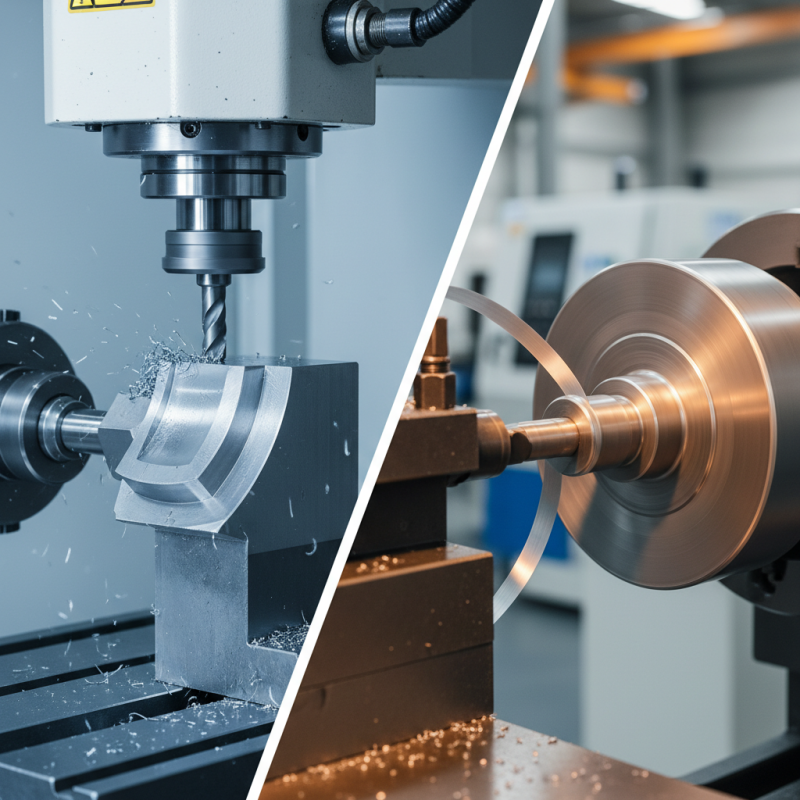
China Best Milling vs Turning: Overview of Manufacturing Processes
When comparing milling and turning, it’s essential to understand their distinct processes. Milling employs a rotating cutter to remove material from the workpiece. This method is versatile, capable of creating complex shapes and flat surfaces. Various cutter types can achieve different finishes. An advantage of milling is its ability to work on multiple axes, making it suitable for intricate designs. However, it requires a steady setup and precision, which can lead to higher costs and more time-consuming setups.
Turning, on the other hand, utilizes a rotating workpiece against a stationary cutter. This technique is ideal for cylindrical shapes. Turning is generally faster for simple designs but becomes less effective with complex geometries. The simplicity of setup in turning often translates to lower production costs. Nevertheless, turning has its limitations. It may struggle with intricate patterns and requires additional processes for such designs. Each methodology offers unique benefits, but selecting the right one depends on project specifics. Understanding these nuances can guide production choices effectively.
China Best Milling vs Turning: Overview of Manufacturing Processes
| Process Type |
Definition |
Applications |
Advantages |
Disadvantages |
| Milling |
A machining process that uses rotary cutters to remove material from a workpiece. |
Used for flat surfaces, complex shapes, and detailed designs. |
Versatile, can produce complex shapes, and capable of high precision. |
Potentially higher tool wear, slower than some processes, and may require more setup time. |
| Turning |
A machining process that involves rotating a workpiece while a cutting tool removes material. |
Ideal for cylindrical parts, shafts, and various rotational components. |
Efficient for producing round parts, high surface finish, and generally faster than milling. |
Limited to symmetrical shapes, less versatile in design compared to milling. |
Key Characteristics of Milling and Turning Operations
Milling and turning are two foundational processes in manufacturing. Each has distinct characteristics that suit different applications.
Milling involves rotating a cutting tool against a stationary workpiece.
This method is ideal for creating complex shapes and features. According to the National Institute of Standards and Technology (NIST),
about 40% of all machined parts utilize milling due to its versatility, especially in the aerospace and automotive sectors.
Turning, on the other hand, involves rotating the workpiece while the tool remains stationary.
This process is excellent for producing cylindrical parts, such as shafts and bolts. A study by the Manufacturing Engineering Society indicates
that turning accounts for nearly 30% of machining operations. The simplicity of turning allows for faster production rates, but it may struggle with intricate designs.
Each method has its advantages and limitations. Machinery and tooling for milling can be costly, often leading to longer setup times.
In contrast, turning gears its focus on round components. Yet, with advancements in technology, some CNC machines now combine both processes, reflecting an industry shift.
Balancing these methods can lead to optimized production efficiency.
Comparison of Applications: When to Use Milling vs Turning
When considering milling and turning, knowing their applications is essential. Milling is ideal for creating complex shapes and detailed features. It uses a rotating cutter to remove material from a workpiece. This process is suitable for making intricate designs, like gears or slots. The versatility of milling makes it a preferred choice for industries requiring high precision.
Turning, on the other hand, excels in producing cylindrical parts. It involves rotating the workpiece against a stationary cutting tool. This method is often used for making shafts or bolts. Turning is efficient for producing items in bulk. However, it may not handle complex geometries as well as milling.
Each method has its pros and cons. A combination of both can lead to optimal results. Understanding specific project needs helps determine the right approach. Sometimes, the choice might not be clear-cut. Factors like material type and desired tolerances play significant roles. Careful assessment of these elements ensures better productivity and quality outcomes.
Advantages and Disadvantages of Milling and Turning Techniques
Milling and turning are essential machining techniques widely used in manufacturing. Each method has unique benefits and drawbacks, affecting their application in various industries. According to industry reports, milling accounts for approximately 40% of all machining operations, making it a popular choice for complex parts. It allows for intricate designs due to its multi-directional capabilities. However, milling can be slower, especially for bulk productions.
In contrast, turning is typically faster for cylindrical components. Its linear motion simplifies production processes. Research shows that turning can reach higher material removal rates, especially with metals like aluminum and steel. Yet, turning has limitations in terms of shape complexity. While it excels at creating precise cylindrical forms, it cannot match the versatility of milling when intricate designs are required.
Both techniques pose challenges. Milling machines often require frequent tool changes, leading to potential downtime. Meanwhile, turning machines can face issues with part stability, causing dimensional inaccuracies. Understanding these trade-offs is crucial for manufacturers aiming to optimize production efficiency while maintaining the quality of their output. Making informed decisions requires expertise and a deep understanding of both methods.
Understanding Cost Factors in Milling and Turning Production
Milling and turning are key processes in manufacturing. Cost factors often determine which method is preferred. Understanding these factors enhances decision-making.
Milling typically involves removing material from a workpiece. This process can be expensive. A recent industry report estimates milling costs can exceed $75 per hour. This number varies based on the complexity of designs and materials used. The setup time for milling is often longer. This adds to the overall production costs, making it crucial to assess project requirements closely.
Turning, on the other hand, is generally more cost-effective. The American Machine Tool Distributors’ Association notes that turning can cost around $50 per hour. This is largely due to faster cycle times and reduced setup requirements. Companies often prefer turning, especially for simpler, cylindrical designs. However, not all projects fit this mold. Sometimes, a milling approach may be necessary despite the higher cost.
Tips: Always evaluate the design specifications before choosing a method. Small changes in geometry may shift the preferred option. Also, consider bulk production runs. They can often offset initial setup expenses. Balancing these factors can lead to better financial outcomes.
FAQS
: Milling involves rotating a cutting tool against a stationary workpiece. Turning rotates the workpiece while the tool is stationary.
Milling excels in creating complex shapes and intricate features. It is widely used in aerospace and automotive sectors.
Turning is ideal for making cylindrical parts like shafts and bolts. It is simpler and allows for quicker production rates.
Milling can be expensive, often exceeding $75 per hour. Costs vary based on design complexity and materials used.
Turning is typically more cost-effective, averaging around $50 per hour. It has faster cycle times and lower setup requirements.
Yes, advancements in CNC technology allow for combining both processes. This can improve production efficiency.
Always assess design specifications and geometry before selection. Small design changes can impact the preferred option.
Milling may be necessary for complex designs. If the project requires intricate features, it can justify the expense.
Yes, turning may struggle with intricate designs since it focuses on round components.
Bulk production runs can offset initial setup costs, leading to better financial results for both milling and turning.
Conclusion
The article "China Best Milling vs Turning: What is the Key Difference?" provides a comprehensive overview of two fundamental manufacturing processes: milling and turning. It outlines the unique characteristics of each operation, highlighting how milling involves rotating cutting tools to remove material from a stationary workpiece, while turning uses a rotating workpiece to achieve the desired shape through a stationary cutting tool.
Furthermore, the article compares their applications, emphasizing that milling is often favored for complex shapes and profiles, whereas turning is ideal for cylindrical parts. The advantages and disadvantages of each technique are also discussed, with considerations for cost factors that impact production. Ultimately, understanding "what is the difference between milling and turning" allows manufacturers to make informed decisions based on their project requirements and budget constraints.

 DSCUT CNC