In the world of manufacturing, achieving high precision in boring operations is crucial. Industry expert Dr. John Smith emphasizes, "Precision is the key to efficiency." His insights highlight the importance of meticulous techniques in enhancing productivity and product quality.
Boring operations require strict adherence to specifications. Every minor detail matters, from tool selection to machine calibration. An experienced machinist knows that even a slight deviation can lead to significant errors. Therefore, understanding how to achieve high precision in boring operations is vital for any manufacturer aiming for excellence.
However, the journey to precision is not always straightforward. Many face challenges like tool wear and misalignment. These issues necessitate a constant reevaluation of methods and practices. In striving for perfection, continuous learning becomes essential, reminding us that there is always room for improvement. Mastering this art involves both skills and critical thinking.
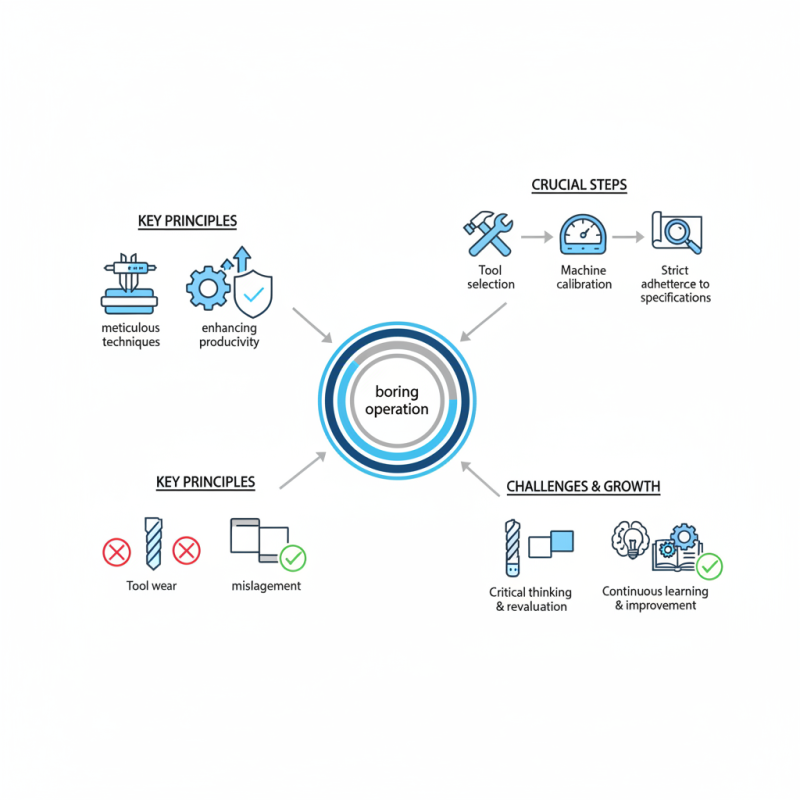
Precision in boring operations is crucial for achieving high-quality results in manufacturing. When working on components that require precise dimensions, even a slight error can lead to significant setbacks. The tolerance levels in these operations demand careful consideration. Boring tools must be maintained accurately to avoid undesired deviations in size.
Understanding the importance of precision extends beyond mere measurements. It involves selecting the right tools, techniques, and conditions for each operation. For example, the choice of coolant can affect tool life and surface finish. Additionally, environmental factors like temperature fluctuations may distort measurements. Workers often overlook these aspects, resulting in costly mistakes. Precision is, therefore, an integration of knowledge, experience, and the right practices.
Moreover, regular training and assessments are essential for improving skills in this domain. Operators must be vigilant about machine calibration and tool wear. Misalignment or tool degradation can compromise precision. Potential pitfalls exist, such as neglecting routine checks or assuming that past performance ensures future accuracy. A continuous emphasis on precision fosters a culture of reliability in boring operations. This commitment ultimately leads to enhanced product quality and operational efficiency.
Achieving high precision in boring operations hinges on multiple key factors. Tool selection plays a pivotal role. Using the right tools affects the accuracy of the finished bore. Tools must be suited to the material being worked on. Dull or inappropriate tools can lead to accuracy issues. Regularly inspecting and maintaining tools is essential for achieving desired results.
The setup of the workpiece is equally crucial. Any misalignment can propagate errors through the boring process. Proper clamping techniques help to secure the workpiece firmly. Vibration during the operation can introduce inaccuracies. Using fixtures that dampen vibrations can improve overall precision.
Environmental factors also contribute to the results. Temperature fluctuations can cause material expansion or contraction. This can lead to variations in hole dimensions. Maintaining a stable workshop environment is often overlooked. Finally, operator skill cannot be underestimated. An experienced machinist understands the nuances of the process. They can make real-time adjustments to enhance precision. Training and continuous learning should be a priority in any shop focused on high precision boring operations.
Achieving high precision in boring operations requires specialized tools and equipment. High-quality boring bars play a vital role. These bars must adjust precisely to minimize vibration. A recent industry report highlighted that precision tooling can enhance accuracy by up to 30%. This adaptation limits tool deflection and ensures consistent depth.
Another critical aspect is the use of advanced CNC machines. These machines provide high repeatability and reduce setup times. The latest findings indicate that precision machining centers can achieve tolerances of ±0.005 mm. However, overlooking the importance of regular calibrations can lead to significant errors. Operators must be vigilant about maintenance schedules to sustain accuracy.
Measuring equipment is equally important. Using electronic depth gauges and laser alignment tools can prevent deviations. A study revealed that 25% of missed tolerances stem from poor measurement practices. Despite having top-tier tools, human error persists. Continuous training and awareness can mitigate this risk. Emphasizing quality control will ensure that high precision is maintained throughout the boring process.
Achieving high precision in boring operations is essential for various industries. Techniques such as proper tool selection and precise machine setup can significantly influence the outcome. According to a recent report by the American Society of Mechanical Engineers, nearly 30% of machining errors are attributed to inadequate tool choice. Selecting the right tool material and geometry can reduce these errors and enhance precision.
Implementing best practices during machining operations is equally important. Regular maintenance of boring machines ensures consistent performance. Reports suggest that machines with optimal maintenance schedules can perform with 15% higher accuracy. Additionally, utilizing cutting fluid appropriately can reduce friction and heat, thereby improving the life of the tool and the quality of holes produced.
However, operators often overlook the importance of setup time. In some cases, wasting time on improper alignment can lead to flaws in the operation. Not all techniques are foolproof; operators need to assess their setups frequently. There is always room for improvement, and re-evaluating operational techniques is crucial for enhancing overall precision in boring operations.
| Technique | Description | Precision Level | Best Practices |
|---|---|---|---|
| Use of CNC Machines | Computer Numerical Control machines enhance precision by automating the boring process. | ±0.01 mm | Regular maintenance and calibration of CNC machines are essential. |
| Proper Tool Selection | Selecting the right boring tools based on material and desired outcome greatly impacts precision. | ±0.05 mm | Use tools that are specifically designed for the material being bored. |
| Optimal Cutting Speed | Adjusting the cutting speed according to the material can help achieve better precision. | ±0.02 mm | Refer to manufacturer's recommendations for cutting speeds. |
| Cooling and Lubrication | Using coolant helps reduce temperature and wear on the tool, increasing precision. | ±0.03 mm | Ensure a consistent flow of coolant during the operation. |
| Workpiece Fixturing | Properly securing the workpiece reduces vibration and movement, improving precision. | ±0.01 mm | Use high-quality fixtures to minimize play and movement. |
Achieving high precision in boring operations requires rigorous quality control measures. One effective approach is to implement regular calibration of boring tools. This process ensures that each tool maintains its cutting edge at optimal standards. Precise measurements are critical to avoid variances that can lead to costly rework.
Workpiece inspection is another essential measure. Consistent checks can highlight deviations early in the process. Using digital gauges or micrometers can enhance accuracy, but the human element is crucial. Engaging trained operators familiar with the equipment can elevate precision further.
Documentation of every operation can provide insights into patterns. It can reveal recurring issues or successes that warrant further examination. Reflecting on past projects allows teams to identify areas for improvement. Emphasizing a culture of quality over quantity fosters meticulousness. Boring operations thrive on detail-oriented practices. Inconsistent processes lead to imperfections that can jeopardize results.
: Tool selection, workpiece setup, environmental conditions, and operator skill significantly influence precision.
The right tools match the material and ensure accuracy. Dull tools cause errors and inaccuracies in boring.
Proper clamping techniques prevent misalignment. Secure workpieces firmly to minimize errors during operations.
Vibration can introduce inaccuracies. Using fixtures that dampen vibrations is crucial for improving precision.
Temperature changes can cause material expansion. A stable workshop environment helps maintain consistent hole dimensions.
Experienced machinists can make real-time adjustments. Continuous training is vital for maintaining high precision.
High-quality boring bars and advanced CNC machines significantly improve accuracy and reduce setup times.
Correct measurement tools prevent deviations. Poor measurement practices account for many missed tolerances.
Regular calibration is necessary to avoid significant errors. Operators should maintain strict schedules for calibration.
Human error remains a risk. Continuous training and quality control can help reduce mistakes.
Achieving high precision in boring operations is crucial for ensuring the quality and accuracy of machined components. This article emphasizes the importance of precision and outlines the key factors influencing it, including tool selection, machine calibration, and environmental conditions. To achieve high precision in boring operations, operators should utilize appropriate tools and equipment designed for fine tolerances, implement effective techniques such as proper alignment and consistent speed control, and follow best practices throughout the process.
Moreover, quality control measures play a vital role in maintaining precision. Regular inspections and measurements help identify deviations early, allowing for prompt adjustments. By incorporating these strategies, manufacturers can significantly improve their capabilities in boring operations and enhance overall productivity, ensuring their output meets stringent precision requirements.

DSCUT CNC